Plumbing installations are rarely less effective for having to incorporate multiple 90 degree turns in order to run water from one location to another. We’ve never seen an instance where 90 degree turns in residential copper plumbing have resulted in significantly diminished water pressure. It’s theoretically possible for that to happen but it would require an almost gratuitous number of 90 degree turns.
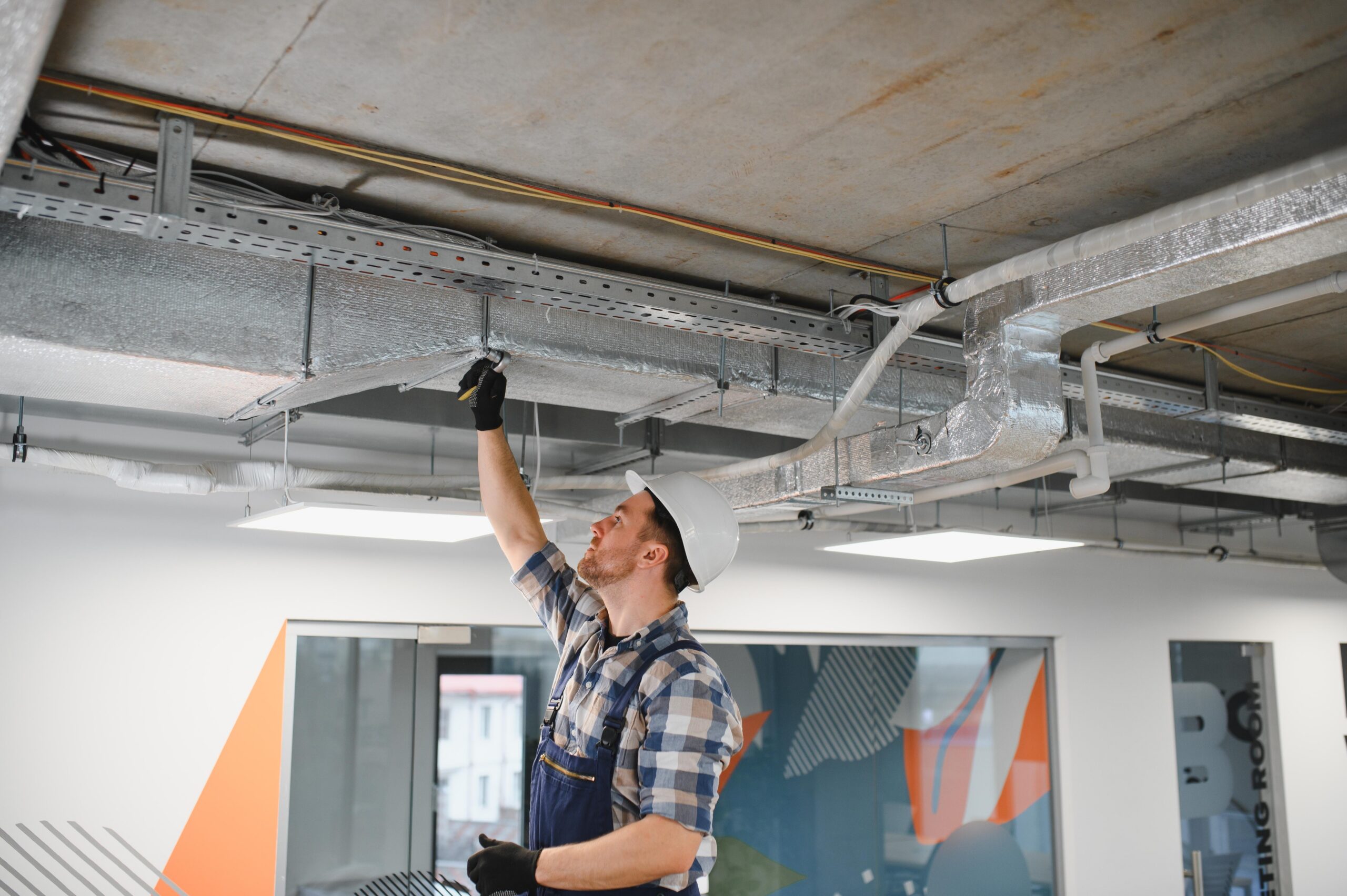
Your air ducts, however, are absolutely susceptible to losing the ability to effectively move heated or cooled air when too many 90 degree turns are incorporated into the duct system. Each 90 degree turn in a duct system is the equivalent of adding roughly 10 to 12 feet of additional ducting in terms of total air resistance. This makes the blower on your HVAC unit have to work that much harder to push the same amount of air and in most cases, it simply can’t. Add more than one 90 degree turn to a duct system and you will certainly notice that airflow after those turns is greatly diminished vs the air coming out of registers located before those turns.
So why do we see homes with multiple 90 degree turns in the ducting? It doesn’t happen often, but in most cases where it does, this happens when plumbing contractors are brought for mechanical rough-in before HVAC, which then limits HVAC placement and/or requires the HVAC installers to work around plumbing fixtures. In some cases, this is fine because experienced plumbers know how to work together with other trades and what will be expected.
At other times, it can be a real problem. We’ve seen several large homes where the drains for HVAC units were installed at one end of the house instead of in the middle. For a small home, this shouldn’t be an issue. But for a large home, it means the HVAC systems will have to be installed at one end of the structure and be forced to push a lot of air to reach the other end. If by necessity, because of the structural layout of the home or to avoid plumbing installations, the ducting requires multiple turns, again, air flow will be far less than ideal and the furthest rooms in the home can be uncomfortably hot in the summer and cold in the winter regardless of thermostat settings.
If you’re building your own home, it pays to have your HVAC contractor/installers involved from the beginning. That will ensure your HVAC location is optimal and ducting is set up for maximum airflow to make the whole house easier to heat and cool.